
New Las Vegas as a city of luxury, haute cuisine, and non-stop shows
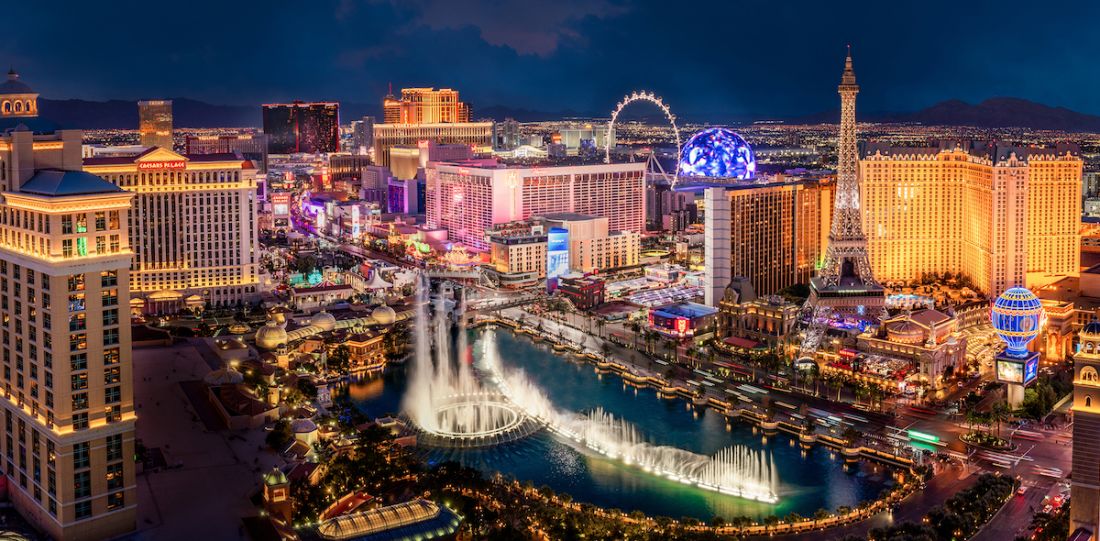
Las Vegas is increasingly moving away from the image of a city that relies solely on casinos and nightlife. The resort expands its offering through luxury-level hotels, high-profile restaurant openings, and major productions, turning into a showcase of premium experiences.
In practical terms, this is reflected in trip details that become almost as important as the Strip and its lights. The focus shifts to a season with milder weather, straightforward logistics from Istanbul, a choice between neighboring flagship hotels, and several restaurants where reservations have become part of the evening’s script.
The Las Vegas everyone has seen in the movies
The city’s pop-culture portrait is instantly recognizable. The Strip’s neon, the clatter of chips, and the slogan what happens in Vegas, stays in Vegas set the tone for a place for years, where night easily replaces the calendar and routine.
This image still works and remains an important part of the brand. However, it describes the real on-the-ground city experience less and less accurately, where alongside gambling live high-end gastronomy, resort infrastructure, and a lineup that looks more like a repertory-style plan of a theater district.
The mechanics of change and the city’s new role
The reason for the refresh is simple and pragmatic. Las Vegas is constantly reinventing itself, responding to competition among resorts, to audience demand for comfort, and to the entertainment industry’s desire to sell not only emotions, but also service and the quality of the environment.
A key part of this picture is the reputation of Sin City, which has historically relied on casinos. Modern Vegas broadens the perspective and is increasingly perceived as a combination of a luxury resort destination, a culinary scene, and entertainment, where the bets are placed not only at the tables, but also in restaurants, theaters, and designer boutiques.
Online casinos as a driver for an image shift
Changes in Las Vegas had been brewing for a long time, but it was the development of the iGaming segment that became the main reason for the changes. The city can no longer rely only on gambling as its main source of income. Modern tourists perceive visiting a casino more as one impression in a long series. This is largely due to the fact that gambling has become available to almost everyone because of online casinos.
At the same time, accessibility is not the only advantage of gambling platforms. They also give the player the opportunity to play in complete privacy. But their main advantage is the game selection, which includes exclusive formats. One of the most popular is crash games, such as Lucky Jet, Aviatrix, Aviator, Jet X. From the authors of a website dedicated to the Lucky Jet online game, we received interesting data. It turns out that thanks to the game, player growth reaches up to 10%.
The more people play in online casinos, the fewer there are who are ready to come to Vegas only for gambling. To retain tourist traffic, the city is reshaping itself and keeps up with trends.
A flight from Istanbul via Amsterdam
One suggested route from Istanbul is a KLM flight via Amsterdam Schiphol with a total duration of about 15 hours. This path is usually chosen for the combination of a connection through a major hub and reliable long-haul service.
Fares and schedules in this direction are subject to change, so public sources often mention the need to check the airline’s website regularly. During the season, updates appear on promotions, price changes, and departure times, which affects the budget and connection convenience.
Two flagships on the Strip and a single infrastructure
The Wynn–Encore pairing is often considered a convenient choice for staying in the heart of the action. The two resorts stand next to each other and are connected by walkways, so the infrastructure is perceived as a shared complex where restaurants, shows, and shopping are available without long rides.
Despite their outward similarity, the hotels have different emphases, and this helps you choose a vacation format. One bets on more intimate luxury, the other on scale and maximum choice within the resort.
Encore Las Vegas – intimate luxury and a packed lineup
Encore is described as a quieter version of luxury in the center of the Strip. The hotel has 2,034 rooms and suites across 50 floors, and the emphasis is on comfort and privacy even with the area’s high occupancy.
Key accommodation and leisure parameters come together in a short list:
- air conditioning and spacious seating areas in the rooms
- options with one king-size bed or two queen-size beds, accommodates up to 4 adults
- bright corridors and restrained, timeless décor
- 4 on-site restaurants and access to additional Wynn venues, among the notable ones are Jardin, Espresso, Sinatra, Wazuzu, Casa Playa
- Encore Theater and proximity to Wynn’s major productions, including Awakening, which shapes an evening plan without complicated logistics
Wynn Las Vegas – resort scale and the updated Tower Suites
Wynn Las Vegas is perceived as a large, self-contained resort ecosystem, where much of your itinerary fits within the building. There are 2,716 rooms and suites across 50 floors, and Strip views become a key reason to choose a room category.
After the $70 million 2022 renovation, Tower Suites cemented their status as one of the most talked-about options on the Strip. In the culinary lineup, Casa Playa, Cipriani, and Delilah stand out, while shopping at luxury boutiques and quick access to Encore complement the impression of a resort that sells not individual services, but a cohesive environment.
Three restaurants that shape a culinary itinerary
The culinary map of Las Vegas today looks like an international mix of genres. In one evening, you can easily encounter modern Japan, California classics, and French fine dining, while the role of the view and staging is comparable to the role of the cuisine.
The choice of three addresses is often explained not only by names, but also by how the restaurant is embedded in the city’s narrative. Each of them works simultaneously as a kitchen and as an experience venue, where the interior, light, and service become part of the production.
Mizumi Japanese haute cuisine with a garden and waterfall
Mizumi is located within the Wynn and Encore complex and is known for its combination of sushi bar, robatayaki, and teppanyaki formats, where cooking turns into a spectacle. The visual side is built on the contrast between the dining rooms: one overlooks the illuminated Tryst Lagoon, the other feels more energetic thanks to open grills.
Key items connect tradition and modern technique, the kitchen is led by Chef Devin Hashimoto:
- 72-hour braised wagyu short ribs with eggplant purée and seasonal vegetables
- seafood Inaniwa pasta with seafood, including scallops and crab, and with uni butter
- teppanyaki favorites, shrimp, Chilean sea bass, scallops, beef tenderloin, lobster
A standout feature of the space is said to be the Japanese garden with a waterfall and a floating pagoda, which works as the evening’s final flourish
Spago and front-row seats to the Bellagio Fountains
Wolfgang Puck’s Spago stands opposite the Bellagio Fountains and remains one of the symbols of Las Vegas’s restaurant evolution. The location sets the tone, the Strip’s evening energy is felt right through the panoramic view, and the dining room works as a social hub.
The menu connects California cuisine with influences from the Santa Monica Farmers Market:
- wood-fired oven pizza
- handmade pasta
- seafood and steaks from prime cuts
- cocktails and desserts as an essential part of the evening’s script
The restaurant is often chosen for an approachable yet upscale format, where the view and the city’s rhythm don’t compete with the food
Guy Savoy at Caesars Palace French fine dining as theater
Guy Savoy at Caesars Palace is called one of the city’s top fine-dining experiences with a direct nod to the Paris original. The interior in the style of Jean-Michel Wilmotte’s project enhances the effect of Paris in Vegas, and the soaring volume of the space makes the dining room more dramatic.
Service is built around rituals that are remembered no less than the dishes, the kitchen is led by Chef Julien Asseo:
- signature artichoke and black truffle soup with mushroom brioche and truffle oil
- a bread cart at the beginning and a dessert cart at the end as part of the evening’s direction
- a tasting menu lasting about 3 hours for those who consider dinner a standalone event
The view of the Strip’s lights and the silhouette of Paris Las Vegas adds the feeling of a city as a set, where gastronomy works in the mode of a grand spectacle